Data Capture on Project Hail Mary: Why 3D Scanning is still Essential in the Age of AI
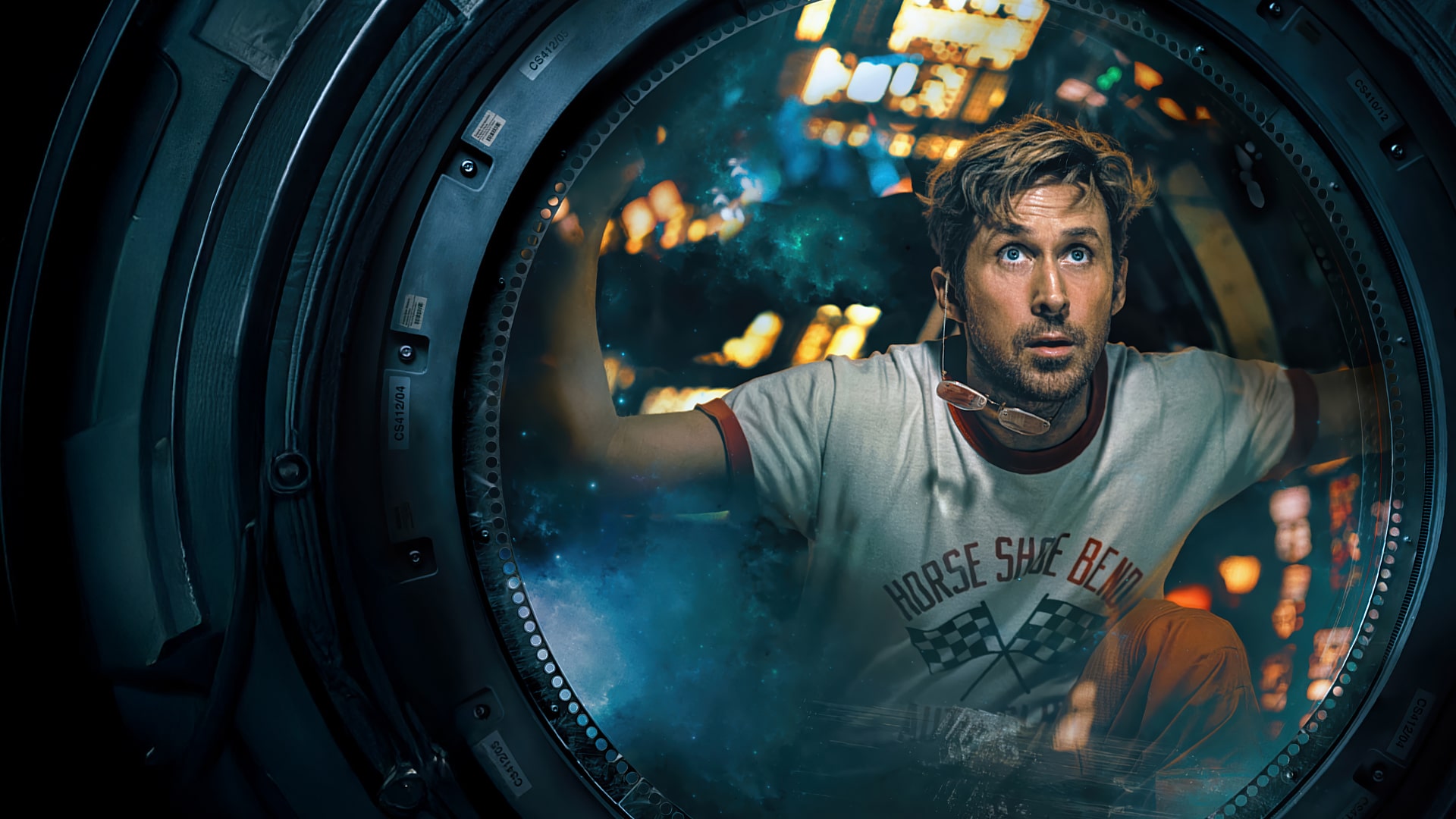
Project Hail Mary represents the absolute peak of modern, high budget filmmaking. Directed by Phil Lord and Christopher Miller, the film achieves jaw dropping realism through massive practical sets and physical puppets.
However, a reliance on practical sets does not mean a lack of visual effects.
Instead, Project Hail Mary embraces hybrid filmmaking: the art of blending the physical world seamlessly with digital extensions. Sitting at the absolute center of that connection is a tool that has quietly powered the film industry for decades: 3D scanning.
What We 3D Scanned for Project Hail Mary
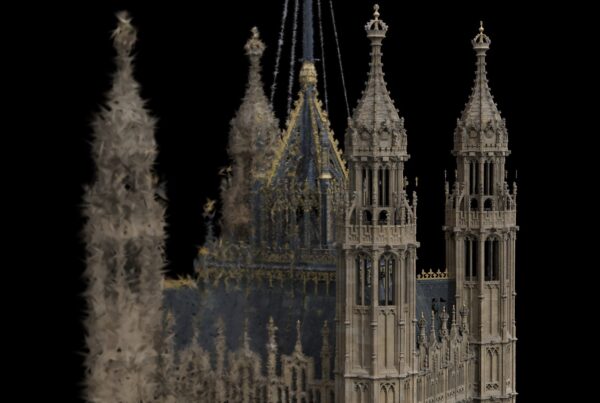
On set for Project Hail Mary, Visualskies captured upwards of 300 props, 200 environments, and 100 cyber scans. These scanned assets were integral to the final film, functioning as set extensions, lighting references, camera tracking markers, and much more. Simply put: without 3D scans, Ryland Grace and Rocky would not have made it into space at all.
Why 3D Scanning AI Fears Took Hold on Set
Yet, despite its long history in production, an undercurrent of anxiety surrounding digital capture has emerged on set. As Generative AI dominates headlines, a wave of fear and misinformation has led many performers to view 3D scanning rigs with hesitation.
The reality from the front lines of production reveals a very different story.
Filming the Impossible: Zero Gravity and Digital Doubles
In Project Hail Mary, Ryan Gosling’s character spends the majority of the story floating through space, navigating catastrophic ship failures, and surviving zero gravity environments. Many of these sequences are physically impossible, and financially absurd, to capture with a live camera crew in real conditions (unless studios plan on sending film crews into orbit).
This is precisely where 3D scanning steps in.
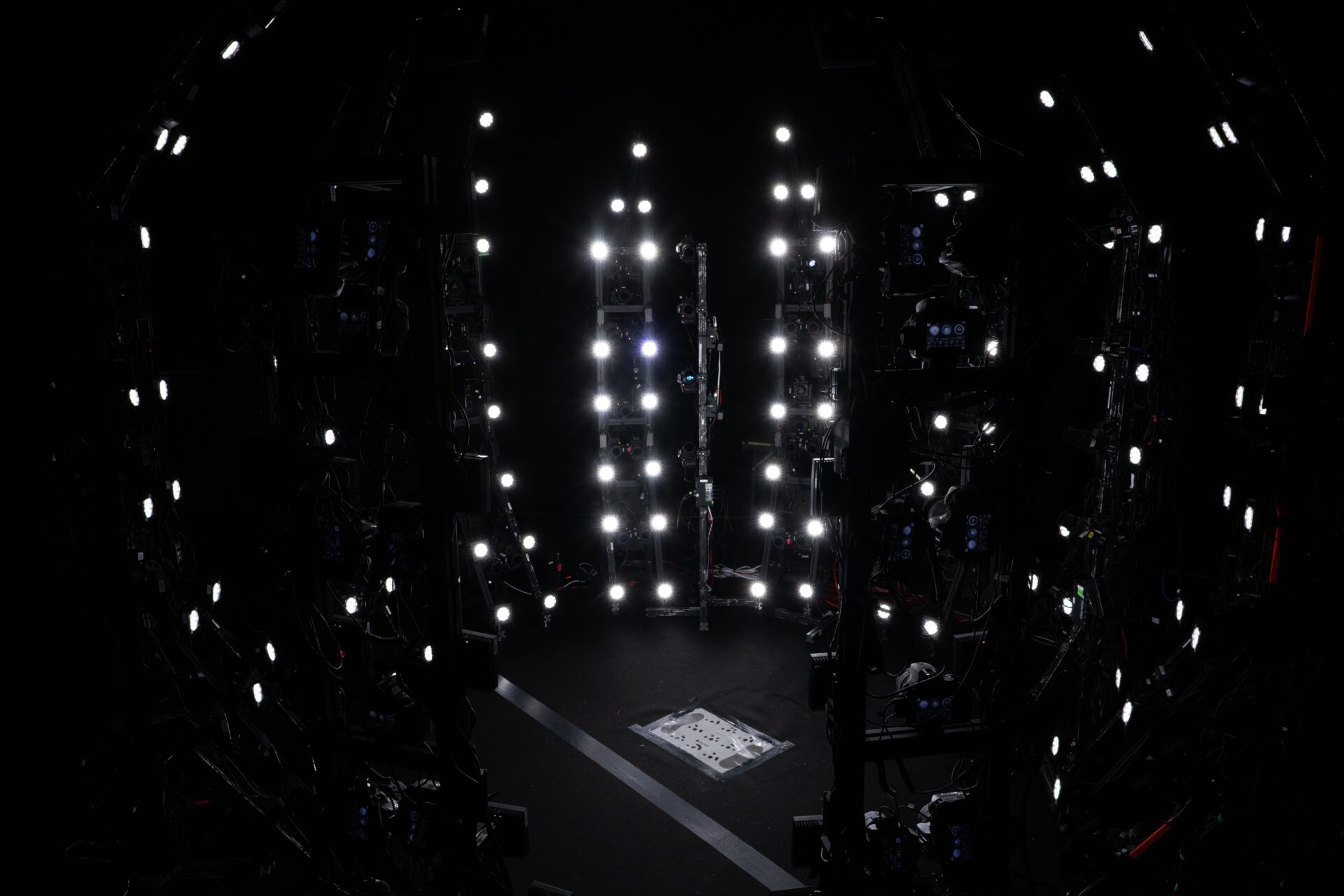
When a VFX team captures a precise, high resolution 3D scan of an actor, the goal is never to replace them, it is to protect them. Digital captures enable performers to safely navigate scenes where a human body or a physical camera rig simply cannot go. Whether executing a dangerous stunt, a complex spacewalk, or integrating into massive set extensions, these technical scans allow directors to maintain cinematic scale without sacrificing the human core of the narrative.
The Data Gap: A 3D Scan Is Not an AI Clone
The single biggest misunderstanding on modern sets is the belief that a standard VFX scan gives a studio the keys to generate an autonomous, AI driven digital clone.
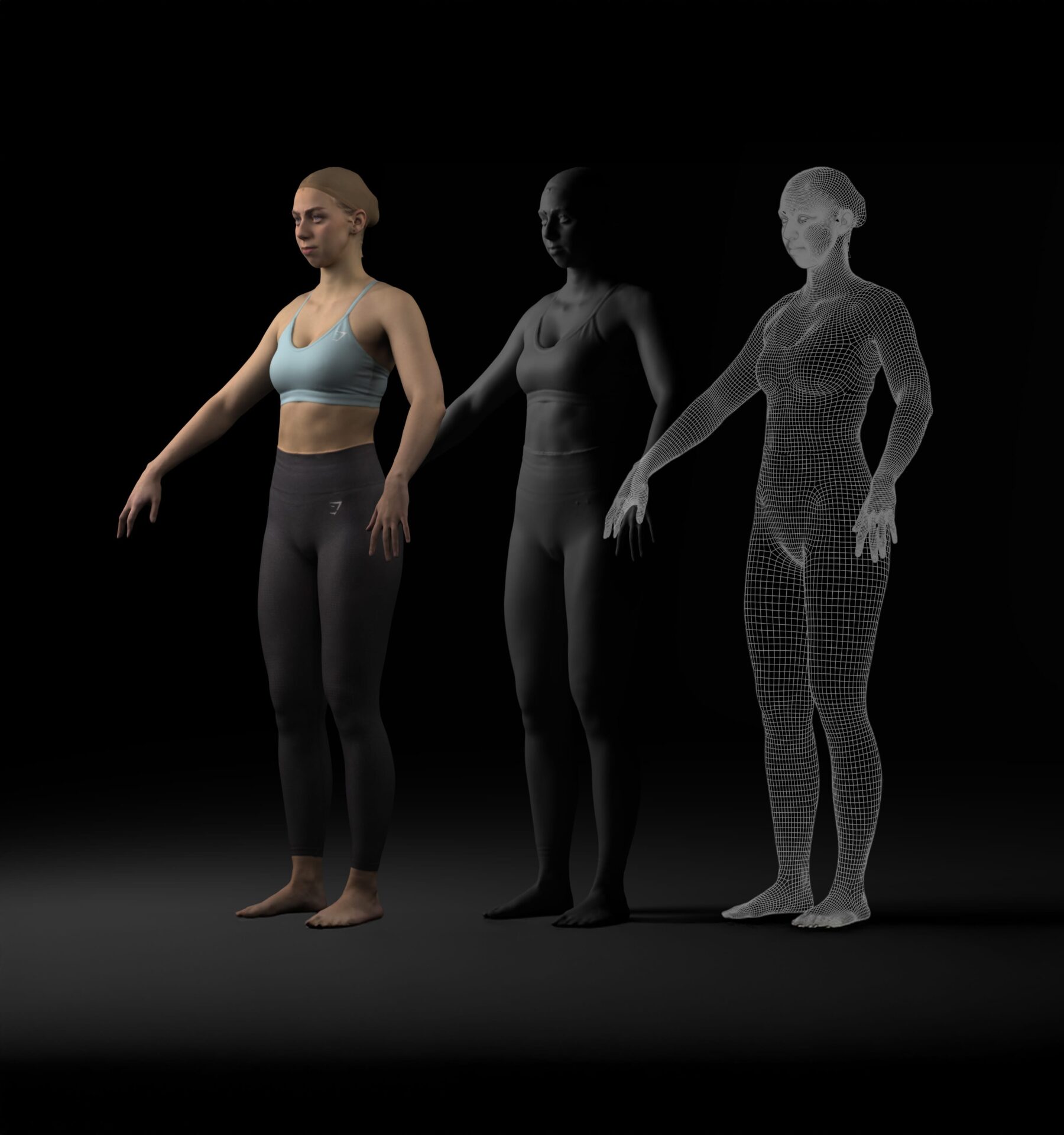
From a technical standpoint, there is a massive data gap between a visual effects asset and a generative machine learning model. A 3D reconstruction of a full body or head relies on roughly 150 high resolution static images. It measures spatial geometry and texture to create a still, highly accurate, digital measurement tool. Technical geometry alone is simply not the right data to replicate an actor’s likeness, emotional performance, fluid muscle movements, or voice.
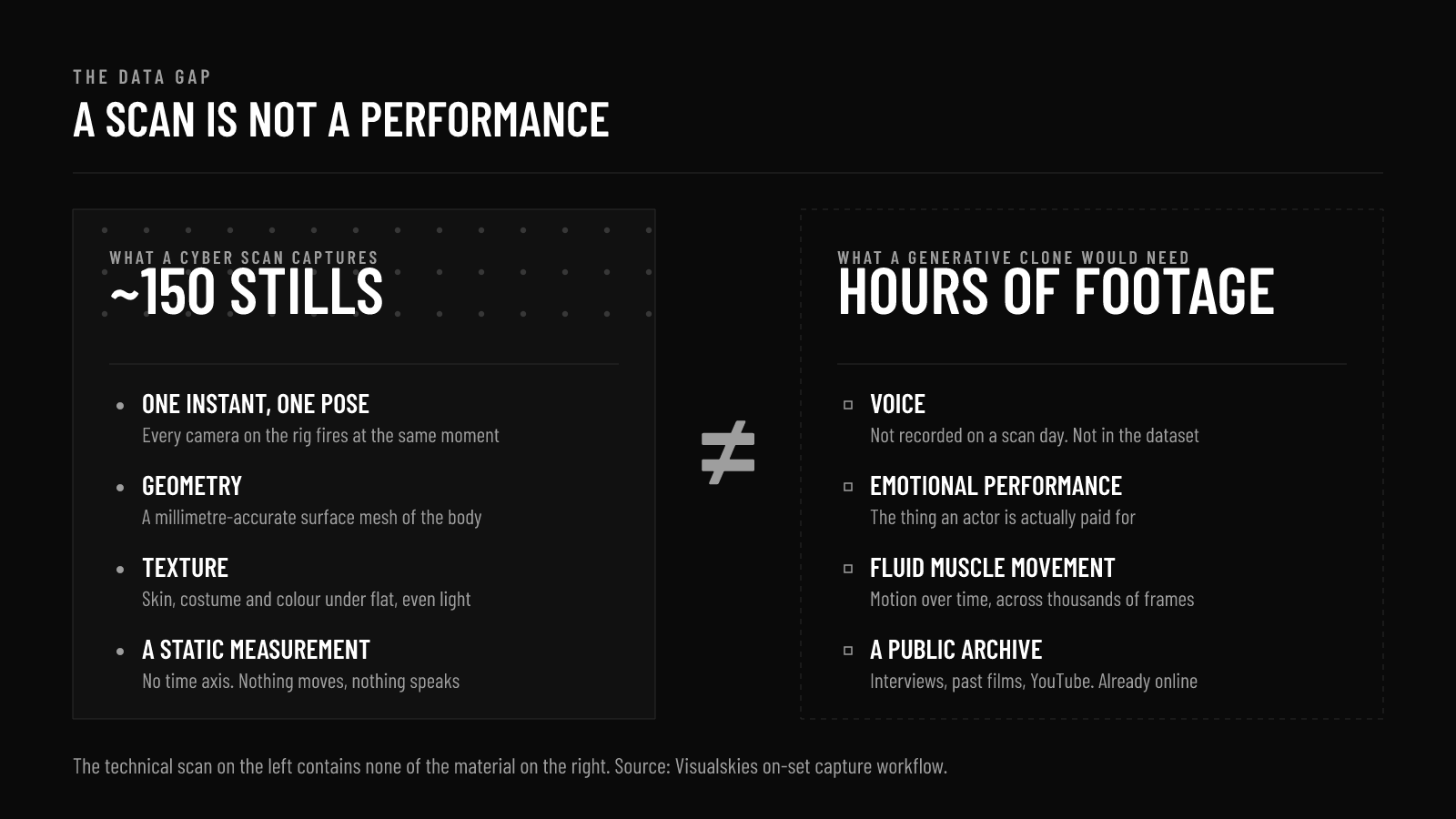
If there is intention to improperly “AI” a performer, they don’t look for an on-set technical scan like we produce day to day. They would use public, online resources like YouTube, interviews, past film clips to synthesise likeness and voice using the massive archives of material from someone’s past which is accessible to anyone online.
The Real Friction Is Contracts, Not 3D Scanning
The anxiety rippling through the acting community is understandable, but the target of that concern is often misplaced. In years of working on high end sets, VFX crews rarely, if ever, see technical capture data used to train generative replacement models.
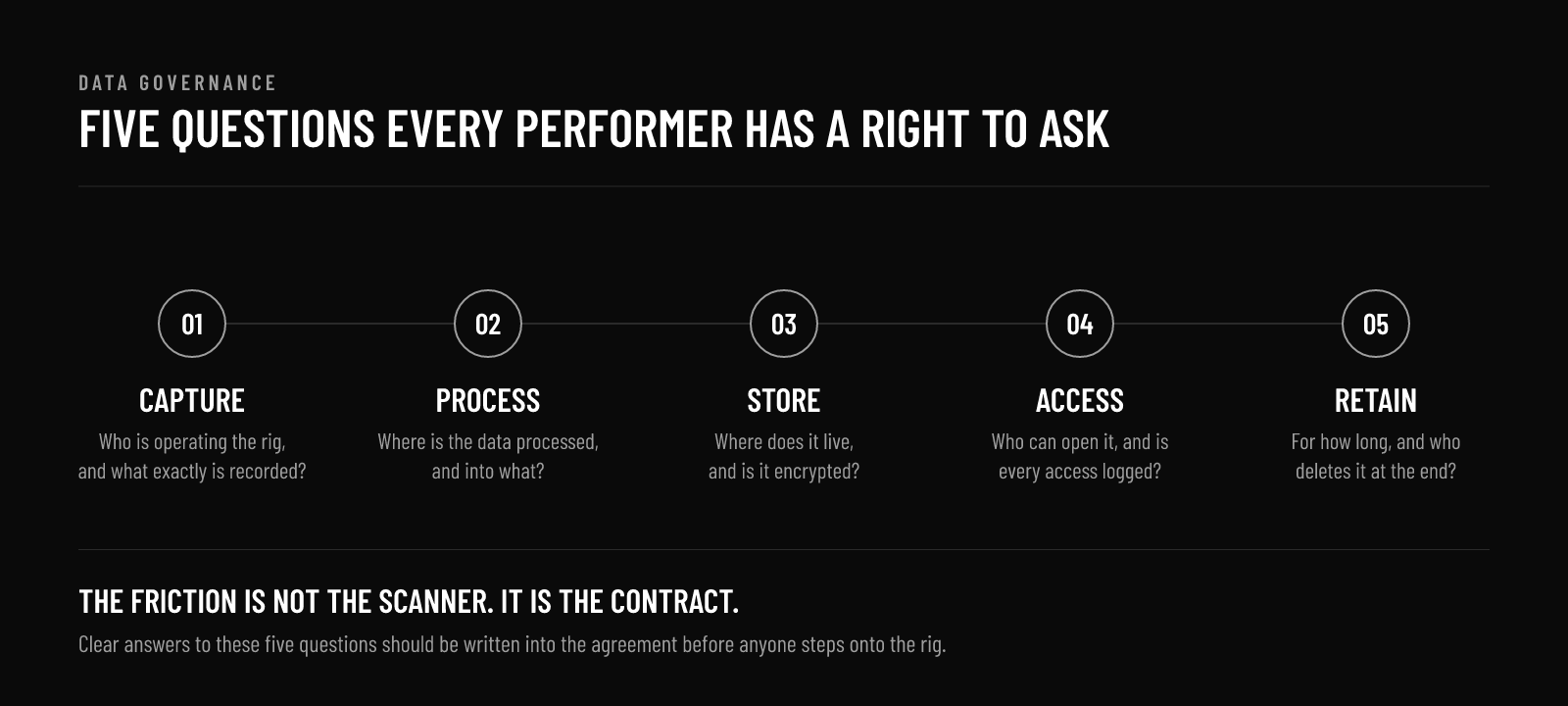
The primary friction on set is not the scanning technology itself; it stems from unclear contracts, a lack of legal transparency, and confusion around data governance.
Performers have a fundamental right to know how their likeness data is processed, where it is stored, who holds access to it, and how long it is retained. Solutions like secure data management pipelines and platforms point toward a future where security and transparency are built into the workflow from day one.
Protecting creative workers does not require demonising the photogrammetry tools that make complex visual stories possible. The path forward lies in clearer communication, technical literacy, and ironclad legal agreements.
Why 3D Scanning Is Still Essential
Blockbusters like Project Hail Mary serve as a reminder of why cinema still requires a firm footprint in the real world. Real light bouncing off real surfaces, combined with precise physical geometry, creates an immersive texture that AI cannot replicate.

3D scanning has enabled photorealistic visual effects for decades, serving as the functional bridge that anchors digital spectacle to human reality. AI has not overtaken the creative heart of filmmaking, and as long as modern productions demand physical, tactile precision, traditional data capture remains as essential as ever.
We do not need to fear the craft. We just need better conversations.
Scanning a Cast or a Set? Talk to Us First.
Visualskies provides cyber scanning, LiDAR and photogrammetry for film, TV and virtual production, with a capture-to-delivery pipeline we run ourselves. Based in London, available worldwide.